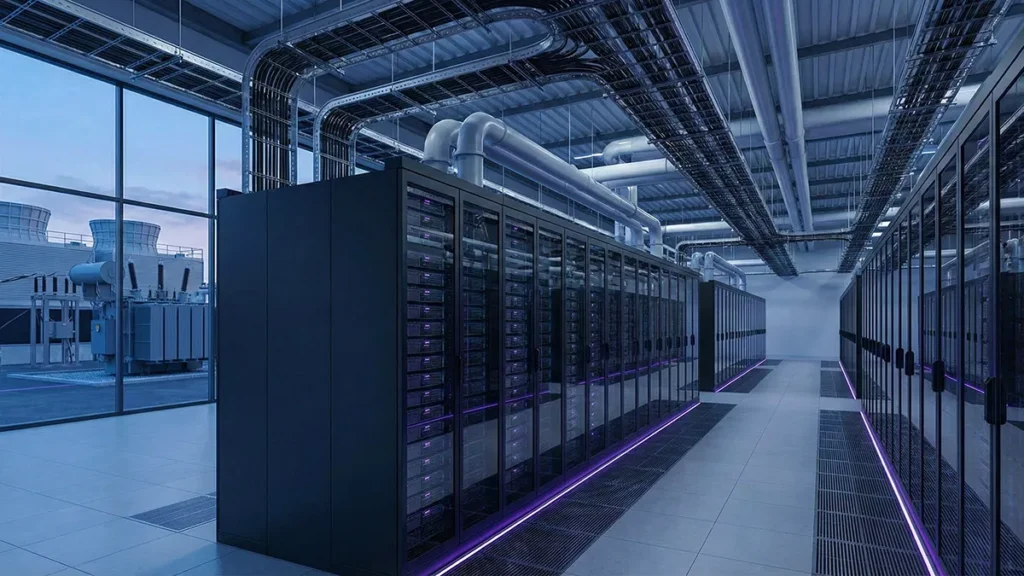
AI trends are no longer defined solely by model releases or benchmark scores. Behind the public narrative of smarter systems and faster applications, a quieter and more consequential struggle is unfolding. The real constraint shaping the future of artificial intelligence is not algorithms, but access to computing power.
As AI trends accelerate across industries, companies and governments are discovering that chips, data centers, energy supply, and physical infrastructure have become strategic assets. This shift is transforming artificial intelligence from a software-centric race into a competition grounded in material resources.
Table of Contents
Computing power as the new AI bottleneck
Training and deploying advanced AI models requires massive computational capacity. Specialized semiconductors, particularly high-performance GPUs, now sit at the core of this ecosystem. The concentration of chip manufacturing and design has turned computing power into a scarce resource, shaping who can realistically compete at scale.
In the race to secure that capacity, procurement starts to look like strategy. Reuters reports that major tech firms are expanding beyond renewables into gas and nuclear deals to keep new AI data centers powered—an indicator that compute scarcity is now intertwined with long-term energy planning. That kind of resource positioning is quickly becoming a defining feature of AI trends.
Data centers, energy, and physical limits
Beyond chips, AI trends reveal growing pressure on energy infrastructure. Large-scale data centers consume enormous amounts of electricity and water, raising concerns about sustainability, grid stability, and regional capacity. In several countries, energy availability now directly determines where AI infrastructure can expand.
This constraint is not theoretical. In another Reuters report, Google agreed to curb power usage for AI data centers during peak demand to reduce strain on the U.S. grid—an early sign that demand-response behavior may become standard for AI-scale operations.
Meanwhile, the economics of the build-out are evolving just as fast. The Financial Times describes a data-center boom triggering a rush of deals, reinforcing that AI expansion is increasingly negotiated through capital, land, power, and long-term contracts—not just software roadmaps.
These constraints are forcing companies to rethink assumptions about infinite scalability. Instead of expanding indiscriminately, organizations increasingly prioritize efficiency, regional diversification, and infrastructure resilience as central elements of emerging AI trends.
The geopolitical dimension of AI infrastructure
The race for computing power has clear geopolitical implications. Control over semiconductor manufacturing, supply chains, and energy resources now intersects with national security concerns. Governments increasingly frame AI infrastructure as critical national capacity rather than commercial convenience.
This shift is reflected in policy debates around export controls and domestic chip production. A World Economic Forum analysis on the battle for chips captures how semiconductor capacity is being treated like a strategic commodity—an angle that increasingly shapes AI trends at the national level.
Big Tech consolidation and competitive imbalance
AI trends also expose widening gaps between companies with access to large-scale infrastructure and those without. A small number of technology firms control the majority of advanced AI computing capacity, reinforcing structural advantages that are difficult to replicate.
This concentration reshapes innovation dynamics. Smaller companies and research groups increasingly depend on partnerships with cloud providers, limiting independence and influencing experimentation paths. These pressures echo patterns discussed in analyses of AI business strategy, where infrastructure access determines long-term competitive positioning.
Why infrastructure now shapes AI innovation
The implications of this shift extend beyond competition. When computing power becomes scarce, innovation priorities change. Efficiency, model optimization, and resource-aware system design gain importance alongside raw performance improvements.
Organizations capable of achieving meaningful outcomes with fewer computational resources gain strategic flexibility. This constraint-driven innovation aligns with broader changes in how professionals interact with intelligent systems, where value increasingly comes from integration rather than scale alone.
These dynamics connect closely with ideas explored in analyses of AI-assisted decision-making, where effectiveness depends on intelligent deployment rather than maximal technical ambition.
An AI future grounded in physical reality
The next phase of artificial intelligence will be shaped as much by physical infrastructure as by software breakthroughs. Chips, power grids, cooling systems, and data centers are becoming the invisible scaffolding supporting AI ambition.
Current AI trends suggest that the most consequential battles ahead will not be fought in code repositories, but in supply chains, energy markets, and industrial policy. Understanding this shift is essential for grasping where artificial intelligence is truly headed.