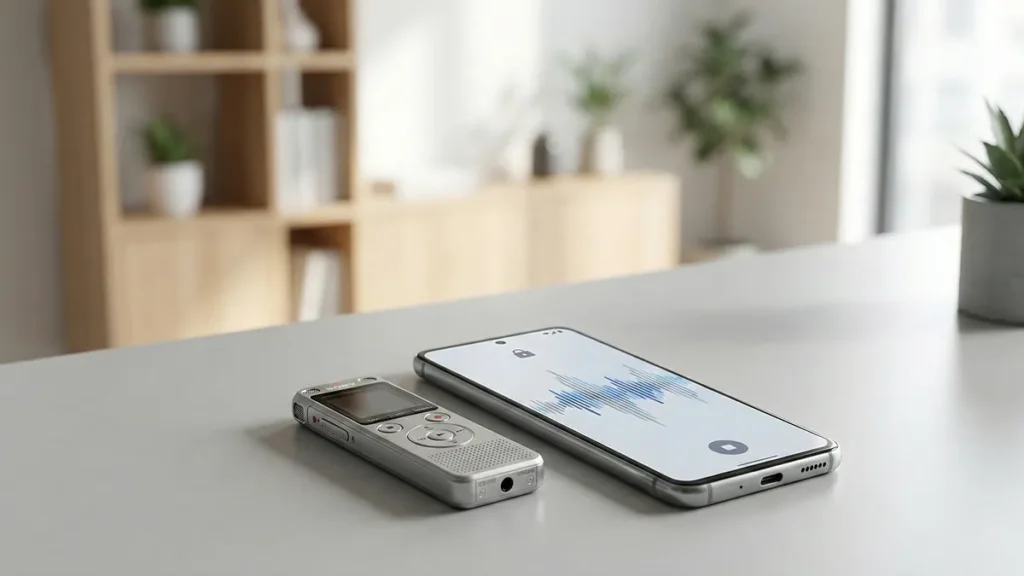
AI devices are no longer limited to experimental gadgets or early-adopter curiosities. They are quietly embedding themselves into everyday technology, changing how people interact with screens, sound, environments, and even physical space. What once felt like futuristic hardware is becoming an invisible layer of intelligence woven into ordinary objects.
From smartphones and wearables to headphones, cameras, and home devices, AI is shifting the role of hardware itself. Devices are no longer passive tools waiting for commands; they increasingly interpret context, anticipate needs, and adapt behavior in real time—an evolution that echoes what happens when AI becomes part of the invisible infrastructure of work.
Table of Contents
From smart gadgets to adaptive companions
Early generations of smart devices relied on predefined rules and basic automation. Today’s AI devices behave differently. They learn patterns, infer intent, and adjust responses over time, blurring the line between tool and companion.
A major driver behind this shift is the idea that more “intelligence” should run locally—on the phone, the earbuds, the watch—rather than depending on constant cloud round-trips. This push toward device-side inference is often described as AI moving to the edge, with dedicated chips increasingly built around the assumption that everyday devices must respond instantly and privately.
The rise of ambient intelligence
One of the most influential ideas shaping AI devices is ambient intelligence—the principle that technology should remain present but unobtrusive. Instead of demanding attention, devices sense context and respond discreetly.
This design mindset shows up in quieter decisions: when to suppress interruptions, when to adapt audio profiles, when to adjust environmental settings, and when to simply stay out of the way. In practical terms, it matches the notion of ambient computing as technology you use without noticing, and it connects directly with the same attention economics behind cognitive load in high-fragmentation workflows.
Hardware shaped by machine perception
AI devices are also reshaping hardware design itself. Sensors, microphones, and cameras are increasingly optimized for machine perception rather than human configuration. Dedicated chips perform inference locally, allowing devices to react quickly even when connectivity is limited.
This direction is part of a broader consumer-edge computing shift discussed in research on consumer edge-AI computing, where performance constraints, privacy expectations, and energy efficiency push intelligence closer to the device.
Everyday devices as decision-makers
As intelligence moves closer to hardware, devices begin making small decisions on behalf of users. A smartwatch suggests rest based on accumulated patterns. Headphones adapt noise control as environments change. Cameras choose framing and exposure automatically.
Individually, these decisions feel minor. Collectively, they shape habits, attention, and expectations of effort—mirroring how AI-guided decision systems influence organizations through continuous micro-optimizations rather than dramatic, visible interventions.
The limits of intelligence in physical form
Despite rapid progress, AI devices face unavoidable constraints. Battery life, thermal limits, sensor quality, and form factor restrict how much intelligence can live inside physical objects. Models must balance capability with efficiency, often relying on compressed architectures and specialized runtimes.
And as AI ambitions grow, the device-side push for efficiency becomes more than a product choice—it starts to look like an infrastructure strategy. The same resource pressures shaping chips, data centers, and energy show up in the wider context of the global race for computing power.
Why AI devices matter now
The growing presence of AI devices marks a shift in how intelligence enters daily life. Rather than arriving primarily through apps or explicit interactions, it emerges through objects people already rely on. AI devices matter not because they are flashy, but because they quietly redefine what everyday technology expects from us—and what we expect from it.